Tricycle is pleased to offer the Tricycle Talks podcast for free. If you would like to support this offering, please consider donating. Thank you!
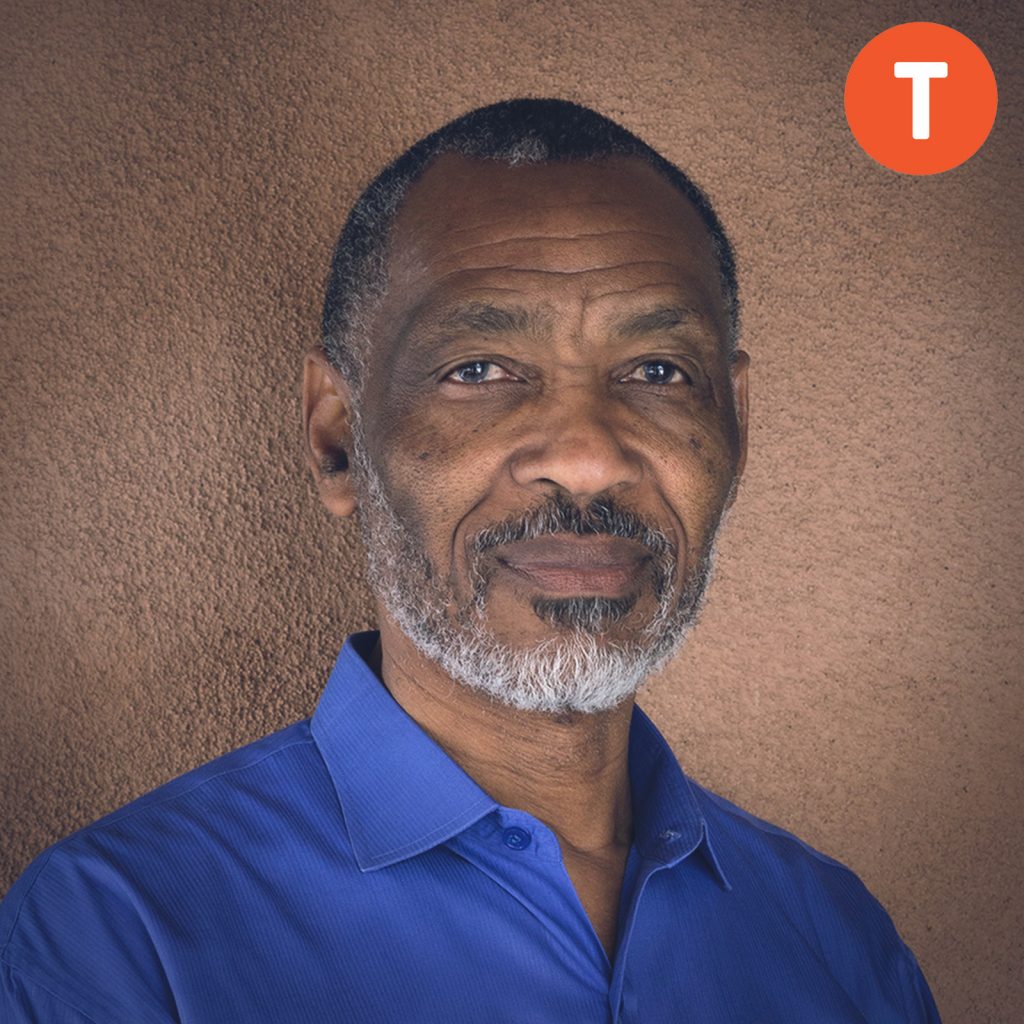
Ralph Steele is the founder and guiding teacher of Life Transition Meditation Center in Santa Fe, where he teaches somatic meditation and other practices geared toward supporting people through major life changes. Steele grew up on Pawleys Island, where he was raised by his grandparents after his father was killed by the Ku Klux Klan. As a teenager he moved with his mother to Japan, where his exposure to martial arts sparked a lifelong fascination with practices of embodiment. Eventually, after serving in the Vietnam War, Steele ended up practicing meditation as a way of coping with trauma and addiction.
In this episode of Tricycle Talks, Tricycle’s editor-in-chief, James Shaheen, sits down with Steele to talk about his remarkable life story, including the dharma lessons he learned from his grandmother, Sister Mary, how meditation helped him learn to sit in the fire of pain, and how he adapts Buddhist teachings in the retreats he has been leading for veterans.
Read more about Ralph Steele in his 1999 Tricycle article, “In the Lineage of Sister Mary.”
Tricycle Talks is a podcast series featuring leading voices in the contemporary Buddhist world. You can listen to more Tricycle Talks on Spotify, Apple Podcasts, and iHeartRadio.
♦
We’d love to hear your thoughts about our podcast. Write us at feedback@tricycle.org.
Read transcript
Ralph Steele: Treasure yourself. I’m talking to everybody because life is short, and it’s unpredictable, and the best teachings is what we see between our ears and what we experience internally. The practice still works. It doesn’t change. If you notice, everything else is changing, but all the way back to ancient times, the sutras, it’s still the sutras, and the practice is still the practice. That’s amazing, people. James Shaheen: Hello, and welcome to Tricycle Talks. I’m James Shaheen and you just heard Ralph Steele. Ralph is the founder and guiding teacher of Life Transition Meditation Center in Santa Fe, where he teaches somatic meditation and other practices geared towards supporting people through major life changes. As a Vietnam combat veteran and a former Theravada monk, Ralph has recently started leading retreats for veterans with PTSD. In my conversation with Ralph, we talk about his remarkable life story, including his upbringing on Pawleys Island and his early exposure to martial arts, the dharma lessons he learned from his grandmother, Sister Mary, how meditation helped him learn to sit in the fire of pain, and how he adapts Buddhist teachings in his work with veterans. So here’s my conversation with Ralph Steele. James Shaheen: OK, so I’m here with Ralph Steele. Hi Ralph. It’s great to be with you. Ralph Steele: It’s good to be with you too, James. James Shaheen: So Ralph, we’re here to talk about your recent work with veterans, but first I’d like to ask you a bit about your background. You grew up on Pawleys Island off the shore of South Carolina. You wrote a piece for us many years ago about that. So can you tell us about your upbringing? Ralph Steele: OK, yeah, well, my childhood years were on Pawleys Island, so from zero to 12, and my upbringing was very special. Then, my primary teacher was my grandma and my grandpa because my dad was murdered by the Ku Klux Klan, so it made my mom a single parent. So she had to go to work in the city, which was a town called Myrtle Beach. Anyway, I came from a very, very religious family, all the way back to the 1800s, and there was no telephone phone line there. Back then, outhouses and so forth, no running water. We had a pump outside. So I said that because the church itself, not only it was a place for service, but it was also a communication device because race was separated back then, blacks and colored, or white and colored, and anytime we would hear the church bell if it’s not on a Sunday, you know something else is going on. And so people would go to the church and find out maybe a house had burned down, for example. And me and my cousin of course would go in the woods, and we cut wood to rebuild the house. No fire trucks would come. There was no such thing, or EMT, those things just didn’t exist in my life. So childhood sickness at home during those twelve years was all on herbs because there was no such thing as a medical doctor or anything like that. I was very active as a kid, climbing trees, running around, getting hurt, getting cut real bad, and my grandma would always send me to the ocean. At that time you could go in the ocean, and it could heal you back then. James Shaheen: You mentioned that you grew up with your grandmother, Sister Mary, and you say that she gave you your first lesson in mindfulness. So can you tell us about Sister Mary? How did she lay the foundation for your later interest in Buddhism and religious practice? Ralph Steele: Oh my. Discipline and practice, discipline, practice, and respect. Those were pretty much the cardinal rules that came up from Sister Mary for myself, and she was always in my head. There were a lot of things I couldn’t understand. I would get in trouble in school, and by the time I get home, she would be telling me what’s going on. But respect not just for others, but mainly respect for yourself, and that was the biggest, because if you have self-respect, then it’s easier to have respect for any other human being regardless of who they are. Respect was a big, big deal. It’s all in the Pali canon and so forth, discipline, practice, the brahmaviharas are really in the basket of respect, all the brahmaviharas. So respect is a big deal. Huge. Huge, huge. James Shaheen: You know, I love the story of your grandmother giving cornbread and lemonade to the chain gangs and the guard. So she’s expressing respect not only for herself but for others. So can you say something about that? Ralph Steele: Yes, most definitely. That’s amazing. So you read my book? Oh, my goodness. James Shaheen: Well, wasn’t it 2014, yeah? Ralph Steele: Yeah. The chain gang would come down the road, unpaved dirt road, and their job is to clean maybe ten to fifteen feet from the road off to the side, and when they get by our house, that’s when it was a big deal because there were no whites with this group except for the police person or the security person, and he had a big shotgun. And Sister Mary wasn’t an ordinary human being. Before she died, all you have to write, for example, is Sister Mary Rainey, Pawleys Island, South Carolina, the zip code and the letter will get to her. That’s the kind of respect she had, and we know that she was special, and it was just a privilege to be with her. And like you were saying about stepping off the, coming out the house with some sweet bread and a picture of lemonade, that was very, very bold, a bold move for any human being to do at that time. Like maybe ten steps before she even got to the group of people, the security person had already cocked his gun, locked his shotgun in place and everything, and held it up, and Sister Mary walked right by him as if he didn’t even exist. So that’s the kind of human being she was and how she carried herself, and as the gentleman was pouring the lemonade and getting sweet bread, she was blessing them: Bless you. Bless you. Bless you. Tears were coming out of their eyes. She was saying, “Don’t worry, God forgives you.” And so she was giving blessings, and it was so powerful that moment of what she was doing. And the last piece is she turned around and stopped by the security guard to see if he wanted some sweet bread and lemonade, and he just stood there. And so he missed the blessing, but he got it on a nonverbal basis. And from that point on right in front of the house, somebody in the community would strike up a song, and everyone started singing in unison as they continued moving down the road, working was much more in harmony. And so it was just the vibration. It was just amazing, and my brother and I, we would run out in the road and in that vibration and make and shoot marbles. That’s what we loved to do. And this is, yeah, it was a very special, special time and to be in her presence. People were going in the house, for example. One other story, there was an insurance person and we would send them in the house and we know from the past that that person would be changed when he comes out of that house. And usually they were in the house for about thirty minutes or so. And he walks out with a handkerchief in his hand, wiping his face, tears coming down his eyes, and he’s gotten blessed by Sister Mary. James Shaheen: So from Pawleys Island you moved to Alabama and then eventually to Japan. So how did that happen? Ralph Steele: So twelve years was on Pawleys Island, and then my mom remarried someone in the Air Force, and she left, and we went from there to Montgomery, Alabama, and my first time being in a suburb and seeing homes where you can stretch your arms out and touch both houses. I had just never seen anything like that. So it was kind of a culture shock, even though it was an all Black community, they were different and I was different. And so my language was different. English is my second language. I had to go to a speech pathologist later on in years. So after a year there in Montgomery, we went to Bakersfield and that was for another year, Bakersfield, California. And that was different. That was really different because of my first time being in a culturally mixed school, elementary school with whites. But I was a mockery because of my language, even in the class. So it was very tough for myself in getting myself together and keeping the balance, internal balance. After a year there, we went from there to Japan, and my high school was in Japan except for the final six months, and I learned a lot in Japan. I was a jock in high school because that’s where I would get my frustration out is either on the basketball court or on the football field and control my stress management, and I got into martial arts, and that changed my life for the energetics and seeing what a human being can do with their body and first time getting into energy, even though it took me years to understand that because I didn’t share it, not even with my parents, what I experienced. And it took a while for my brain to settle in that there was more to life than just what you see. After friends of mine got drafted and got shot in Vietnam and ended up in the hospital in Japan, and I’m sitting there at the bed seeing old friends of mine and had no idea that I would end up in the military eventually. And so my last six months of high school were in the United States in Kansas City. I thought the world was going to come to an end because it was the 1968 riots that were going on. I literally thought the world was coming to an end. And so I don’t want to talk much about that because I lost a lot of friends. After that, that’s when I joined the military because those riots had such an impact on myself. I’m from a military family, way even before I was born to the present day, many, many, many of us at all branches. Being in this body, it was more freedom in the military than walking around in this particular country at that time. And so I joined the military and ended up in aviation and ended up in Vietnam and ended up in a special unit. During that time I got into smoking cigarettes, five packs a day, and I experimented a little bit with heroin and trying to ease my mental faculties and so forth and came back to the States and had twelve months left in the military. And my drugs were mainly my stress management. Then after I got out of the military, I put down the drugs because I didn’t want my parents to see me like this and didn’t want to be addicted to anything. And also eventually put down smoking my five packs a day. It was only, let’s see, $20 a carton then, and so I think you have to take out a loan to buy a carton of cigarettes these days. James Shaheen: I’m glad I quit many years, thirty, almost forty years ago. Ralph Steele: Yeah. Yeah, yeah, and so I, yeah, I, after I, after completing all of that, my mom said, “What do you want to do?” And I said, “Well, I’m going to try out college because my high school teachers said I couldn’t go to college. And now after what I’ve experienced so far in life, I think I can go to college.” And so I went and did academics, and they wanted me to go to med school just because I took medical courses. I wanted to understand how the body worked, because what I experienced in martial arts was still a question in my head. And just researching the unseen world, I ended up in psychology, didn’t like it, and ended up in humanistic psychology. That was okay. I didn’t like that, and then just completed that to get it out of the way, and I ended up getting into taking another course, and that was religious studies. And that was fun. I would say fun because it was two of us. I was one of two that got honors out of the religious studies department, and I had a lot of fun delving into all the various religions on the planet. The druids were the most fun, studying them and everything. From that, I went on to get into meditation. I started going to meditation retreats while I was an undergraduate. A person named Joseph Goldstein, Jack Kornfield, Sharon Salzberg, Jacqueline Mandell. They were teaching meditation retreats, five, ten, fifteen days. It was the Birkenstock year, and that was quite amazing. I was always watching that, at least a hundred, 100 to 105 Birkenstock shoes outside of the meditation hall, and you’d get through meditating, and everybody found their shoes. There was no issue, never was an issue. James Shaheen: That must have been pretty early on. You know, they’re celebrating their 50th anniversary in February. Ralph Steele: Exactly. Yeah. James Shaheen: That’s a long time ago. Ralph Steele: Yes. James Shaheen: So you took catechism so you could study with some monks in Big Sur, and you described your training with Lama Thubten Yeshe and Stephen Levine, and you say that Stephen taught you to sit in the fire and sit in the pain you were experiencing. I mean, there’s a lot of pain in your story, obviously. Can you tell us about that teaching of sitting in the fire? How did you learn to be with the fire? Ralph Steele: Oh, the language is called samadhi, and of course, this is what got me into the practice, the concentration because of being an ex-addict, and I just needed to learn how to use it as a skill. And it took time and practice. First, as you mentioned, the Jesuits, I almost became a Jesuit, mainly because I just loved to practice, and that’s why I went down to Big Sur. Those monks, they don’t go out in the community, they just practice. And then my old friend Stephen, he was an ex-heroin addict. A lot of people are not aware of that, and so was I, and sitting in that fire is, pain only exists in the physical body, but it took, I think, at least a few decades for what’s between my ears to understand that and experience that and use the practice more as a skill instead of getting so attached to desire of, “Oh, I don’t want this pain,” and so forth. And because of that, I came to realize being with Stephen Levine, Ram Dass, Joseph, Jack, and all the great monks, all of them, all the great monks, is learning to be in the body, but not of the body. And you can read, read, read, which I did read, read, read, but it only comes through practice. James Shaheen: Yeah, you say that if you sit in the fire eventually grace will come. So could you say more about that? Ralph Steele: Now that’s pretty special now, because even in the sutras, you know, you gotta take desire and not throw it out the window but use it as a skill because it’s very subtle there on that particular level, because if you desire just a breath too much, the fire goes into the nice cool water, and you say, “Ah, this is nice,” and you get attached to that, and you get so attached to that that the fire comes back. So you just go back and forth, back and forth, like a ping pong ball on a ping pong table. One paddle is pleasant, the other is unpleasant or painful. It only comes through practice when you have to learn how to hover just over the net. James Shaheen: Yeah, that’s nicely put. You know, I wanted to get to your time in Myanmar and Thailand where you were ordained as a monastic. That’s your Theravada background. So what led to that decision? You’d experienced so many different traditions and religious practices from druidic practices to martial arts to your time in Japan to your time with Stephen Levine and Thubten Yeshe. What led you to Thailand and Myanmar? Ralph Steele: Well, I was in the classic four-year teacher training at Spirit Rock, and so I got into the teacher training, and after the third year, I said, “Is it OK if I just take off,” because I wanted the nectar, and I just wasn’t getting it. That’s when I was just reading like crazy. And initially I had breadth, it was Burma then and Thailand and India and Sri Lanka, all that was on the table. And then I look at, OK, wait a minute, let’s just go for depth instead of breadth. And so I eliminated it down to those two countries, which is now Myanmar and Thailand. First I went around Thailand before becoming a monk to make sure I wanted to practice in these particular monasteries that I had on my list. And so I finally got through and got into the country, and I stepped out the airport and tears just came down my eyes because the country there, wow. It reminded me of being on Pawleys Island on the island during my childhood years, and it was very, very difficult to leave the country there. It was, wow. The people there. Oh my god. What we see as so special here in practice, there is just an ordinary thing because they’re so steeped in the practice generations and generations and generations, and the teachings were just so amazing. It was gentle, and it was totally different than the vipassana teaching here. The teaching there, what’s the best way of sharing it so the listeners can hear it? Well, if you’ve ever seen the classic movie The Blues Brothers with James Brown and the church scene, it was like that, or any church in the South with gospel going on, that’s how the scene was. From the speaker to the audience, it was just rocking all the monastery, all the meditation halls. People were deep, deep in the practice. So leaving there and then going to Thailand. Oh, I didn’t know, Ralph never knew what he was getting into. He was just going, and all these very amazing, amazing teachers were coming across my path. I got to meet a person named Maha Bua and, so we are sitting in Luang Por Chah’s kuti waiting for him, and I’m a rookie, rookie, rookie, monk, and all the other monks got up and started looking into the forest. On one side of this green lawn was the forest, so I got up too, looking into the forest. I didn’t have a clue what I was looking for. I was just looking because everybody else was looking. And as time went on, I found out that animals, deer and cobras and all kinds of folks would come to Luang Por Chah’s kuti, not come inside, but just come to the edge and just be there. And the wind was picking up as we were looking, and leaves flying. We had to hold our robes down, and then it just stopped, the wind, and I turned around and there was a car, two, three vehicles, with him in it. He stepped out, we went under the kuti, bowed three times, and he started talking. He didn’t like sitting cros-legged. He sat to the side, and he told us how he became, did he use the word, today they used the word awakened. He told us how it works. And of the four postures, he loved walking practice, and that’s what happened for him. But as this monk was speaking, his body began to disappear. Luminous. I shrugged my senior monk, one of my senior monks next to me, because I thought I was having some kind of acid flashback. And he said, “No, Punyananda, we’re all seeing the same thing.” I said, “OK.” I read about it, the rainbow body or the luminous body, whatever language you want, but to actually see it, wow, from practice. These are just many of the things that happen on the path of practice. James Shaheen: You know, you know, Ralph, you also trained during this time as a therapist and you ended up establishing a mindfulness-based trauma clinic in Santa Fe, where you live now. It’s called the Life Transition Meditation Center, and you emphasize somatic meditation. So can you say more about the importance of somatic practice in working with trauma? Ralph Steele: Yes, it’s just a play on language. In Myanmar at Sunlun Monastery, breath practice here in the West would be known as somatic. A monk named Sunlun went to India and learned a special practice, and he brought it back to Myanmar, and he began to practice it. I went to his monastery after my rains retreat, and he was an amazing, amazing monk. I practiced with his disciple because he was already gone, even though I got to meet him. They took me to his body. It’ss still intact. He’s still there. His body hasn’t broken down. You know, when the subtle body leaves the physical body, it begins to break down. But he’s still there at another monastery, and so my abbot took me there. He authorized me, he gave me whatever you want to call it, authorized me to bring this practice to the West. And I brought it here, and I initially called it sunlun, and people didn’t really understand and were scratching their heads. And so I said, OK, Ralph, we gotta find another language. And so somatic meditation is just another word for body meditation and various skills. Of course, we all know all the meditation practices. It’s not only about the body, but it’s about body, speech, and mind and everything if you want to get locked into the body. Actually in this interview here with you, James, I’ve used the word body more so than anything else. I usually reference bones, the bones, so I won’t get locked into the concept of body because the Buddha emphasized the aggregates, the five aggregates. That’s who we really are. And so I use for myself, How’s your bones? Take care of your bones, you know? James Shaheen: Well, I just had a surgeon drill a hole in my bones, so I’m feeling my bones right now. But listen, Ralph we’re running outta time, but before we close, I wanted to ask you about the retreats you’ve been leading for veterans. So how do you bring somatic practice into those retreats? Ralph Steele: Working with not traumatized but chronic traumatized populations, I had to find a venue, not just a building but the right kind of room. And from looking all around the country, I ended up right in my own backyard in New Mexico with a room where at least one wall is glass, meaning light comes in there, and that’s been researched with regards to PTSD. And from that I had to change the language because I’m working with human beings that may know of the word meditation, but practice is a few minutes down to ground zero. And so I used of course the foundation of the four noble truths, but I just changed the language, and group process, tone of language, language itself, tone of words that veterans have experienced so many times especially since they have taken their uniform off, and in modern-day military, there’s health groups that happen even before they take their uniform off. So you don’t know what’s going to trigger a human being even though I have a medical team in place and I have all the precautions. So I’m utilizing pretty much anything that is in the vipassana retreat, but the foundation, of course, is the four noble truths in that sixty-four hours that I’m working with them, just working with them in breath meditation, all vipassana, being aware of the breath, and having them look at their own consciousness. The only thing that’s different from a vipassana retreat is in silence, especially when you are walking. This is the other way around. We do tandem walking. I don’t have them walk by themselves. Maybe one meditation period, but the majority of them is tandem walking. And the most common phrase I hear is “I haven’t had a conversation like this since I’ve taken off my uniform.” And after the first twenty-four hours, people feel safe and they can let their guards down and trust that the heart is opening. We do some metta practices, just various kinds of meditation practices that happen in a retreat, but I only have sixty-four hours with them, and so I give them instruction even in lying practice when they go to bed and so forth because of working with the traumatized population to sleep and everything, being able to rest and so forth. And we do a ceremony. Every morning, we honor those that’s on the other side that have died, and we have a community because the motivation that made me put this kind of retreat together when I called Jack Kornfield and Joseph and John Kabat-Zinn, they all old friends of mine, they said, Ralph, right now you’re the only one that fits the tickets. And so twenty-two of us committing suicide daily of just veterans. That’s insane. This is going into the fourth retreat this coming year, and it’s going to take beyond my lifetime to bring this percentage down. It’s going to be a template I’m working on so it can go into other states as well. I have four veterans in training on a teacher training team, a five-year training that they’re going through. James Shaheen: Well, that’s really wonderful work, Ralph, and it’s been really wonderful chatting with you. Anything else before we close? Ralph Steele: Treasure yourself. I’m talking to everybody because life is short, and it’s unpredictable, and the best teachings is what we see between our ears and what we experience internally. The practice still works. It doesn’t change. If you notice, everything else is changing, but all the way back to ancient times, the sutras, it’s still the sutras, and the practice is still the practice. That’s amazing, people. James Shaheen: Ralph Steele, it’s been a great pleasure. Thanks so much for joining us. For our listeners, check out Ralph’s article at tricycle.org. Thank you so much, Ralph. Ralph Steele: Thank you. Thank you, James. Stay healthy. James Shaheen: Great talking to you. You too. Ralph Steele: Take care. James Shaheen: You’ve been listening to Tricycle Talks with Ralph Steele. Tricycle is a nonprofit educational organization dedicated to making Buddhist teachings and practices broadly available, and we are pleased to offer our podcasts freely. If you would like to support the podcast, please consider subscribing to Tricycle or making a donation at tricycle.org/donate. We’d love to hear your thoughts about the podcast, so write us at feedback@tricycle.org to let us know what you think. If you enjoyed this episode, please consider leaving a review on Apple Podcasts. To keep up with the show, you can follow Tricycle Talks wherever you listen to podcasts. Tricycle Talks is produced by Sarah Fleming and the Podglomerate. I’m James Shaheen, editor-in-chief of Tricycle: The Buddhist Review. Thanks for listening!
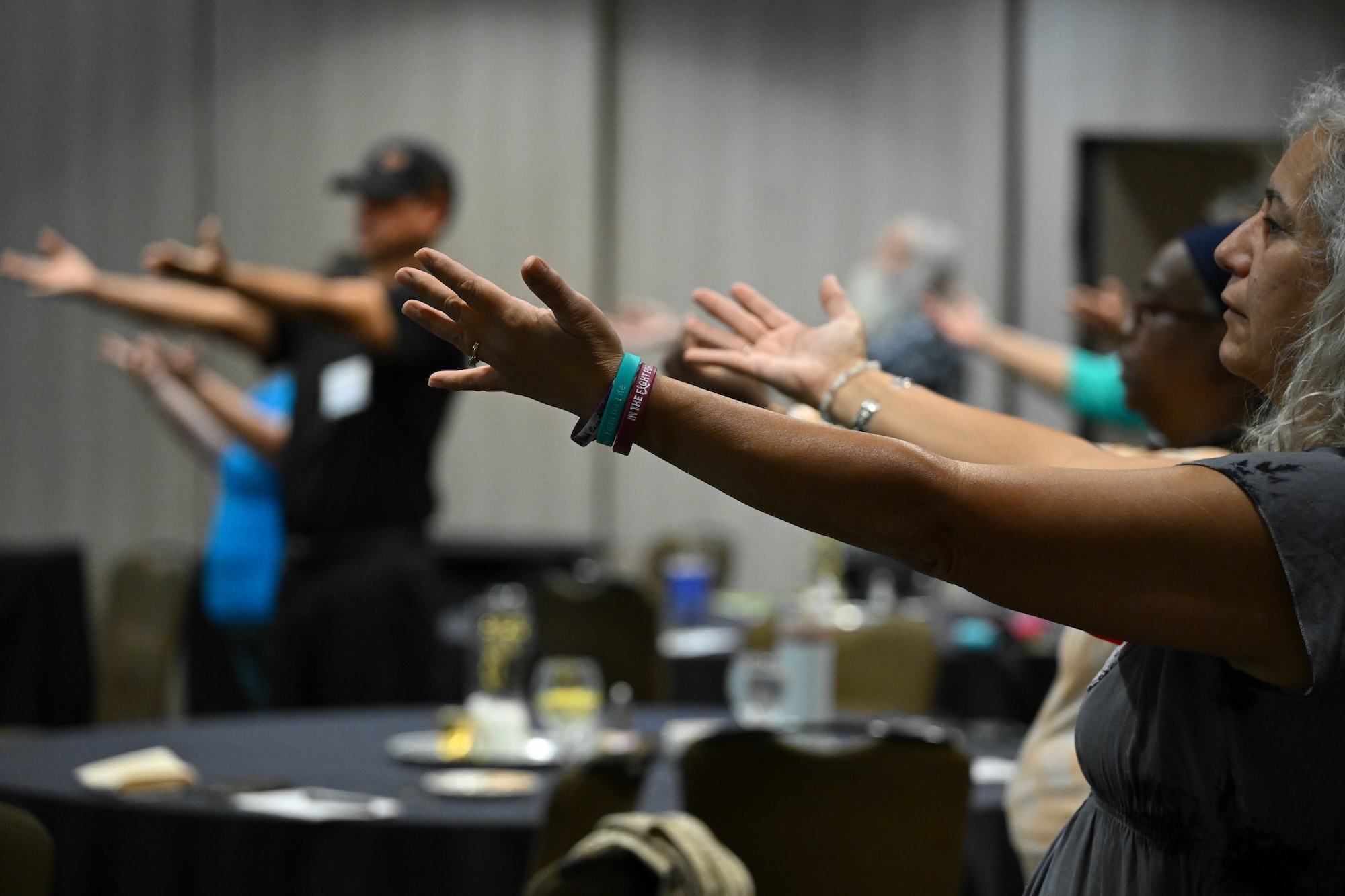
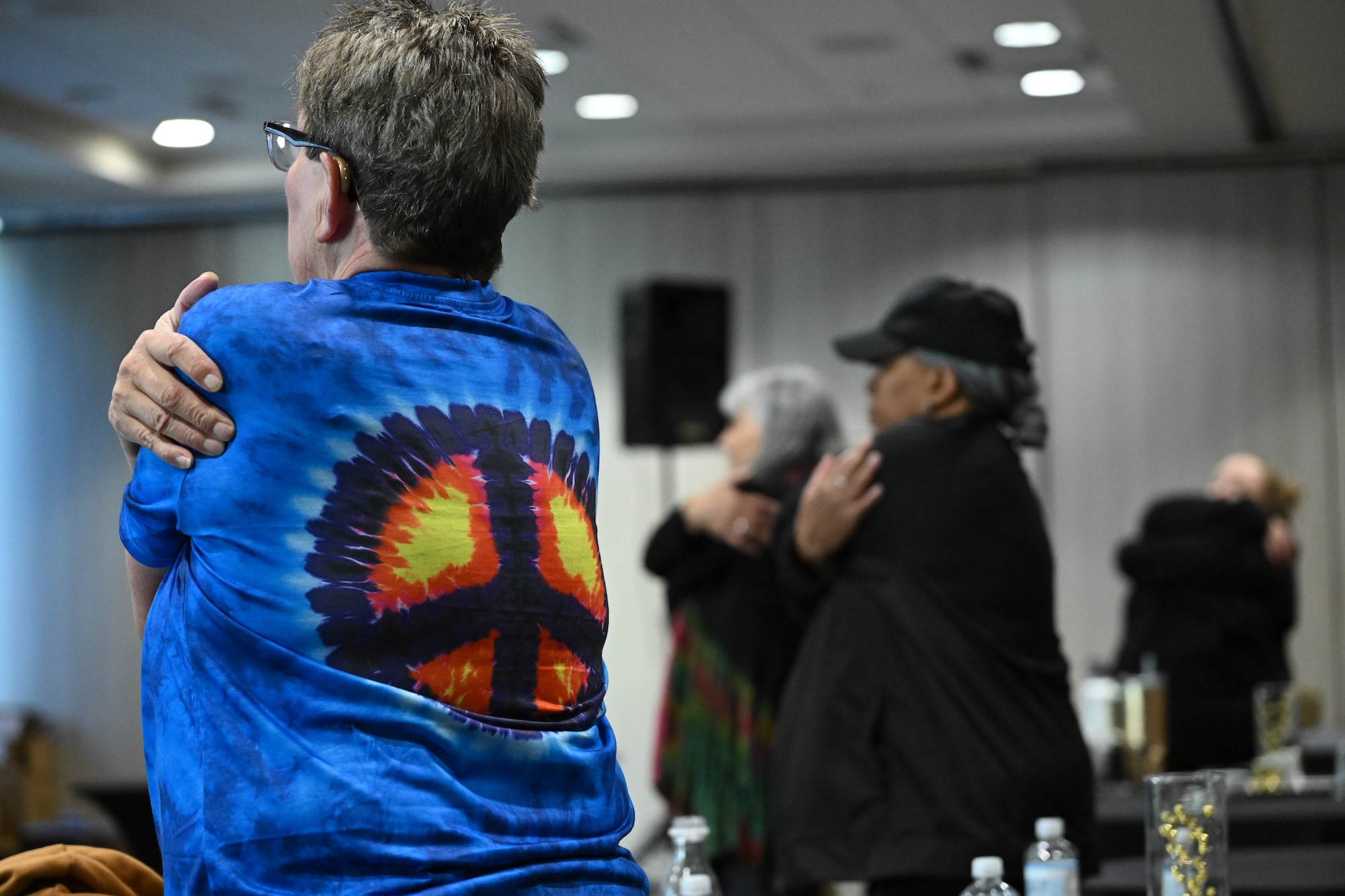
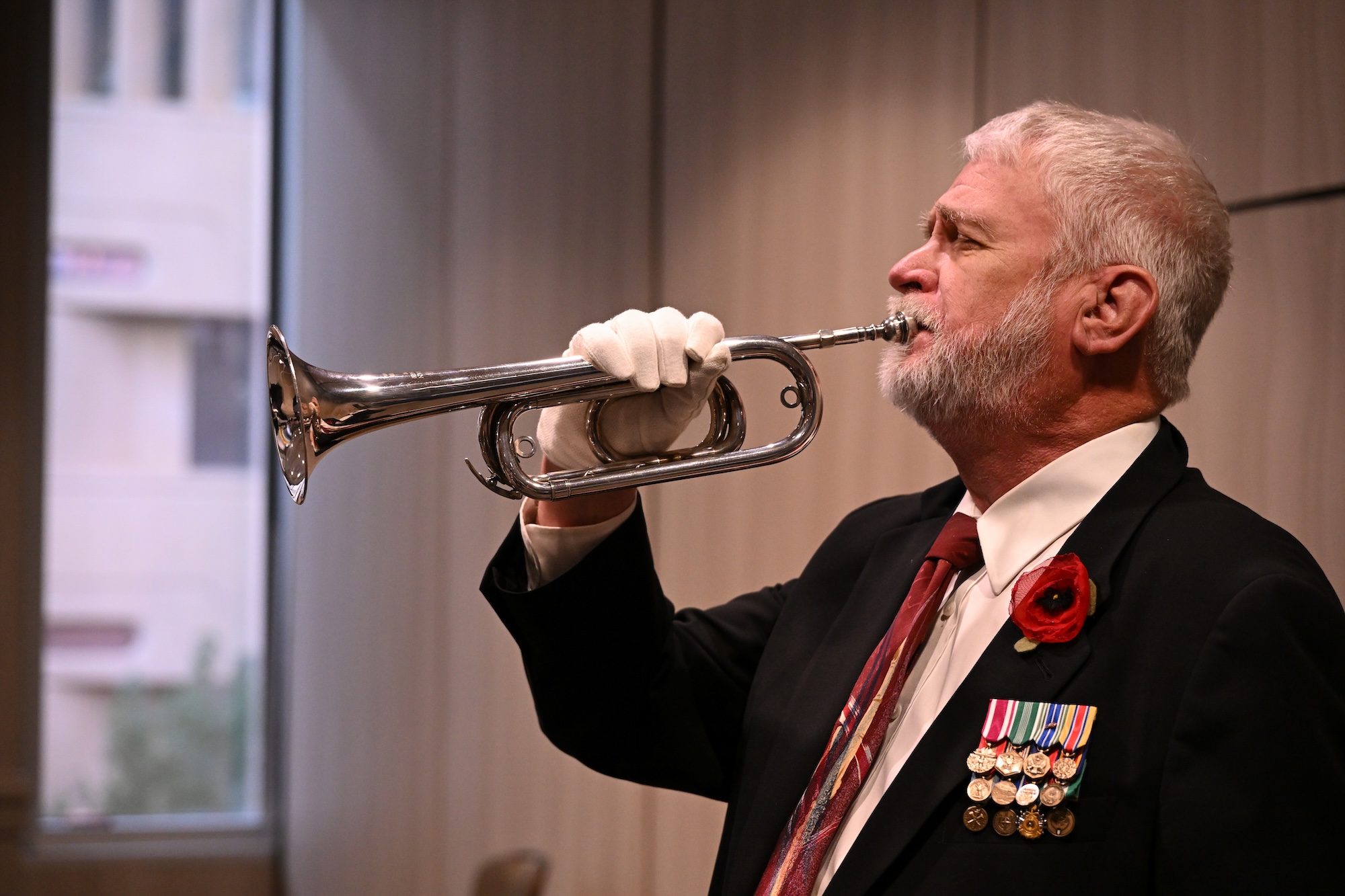
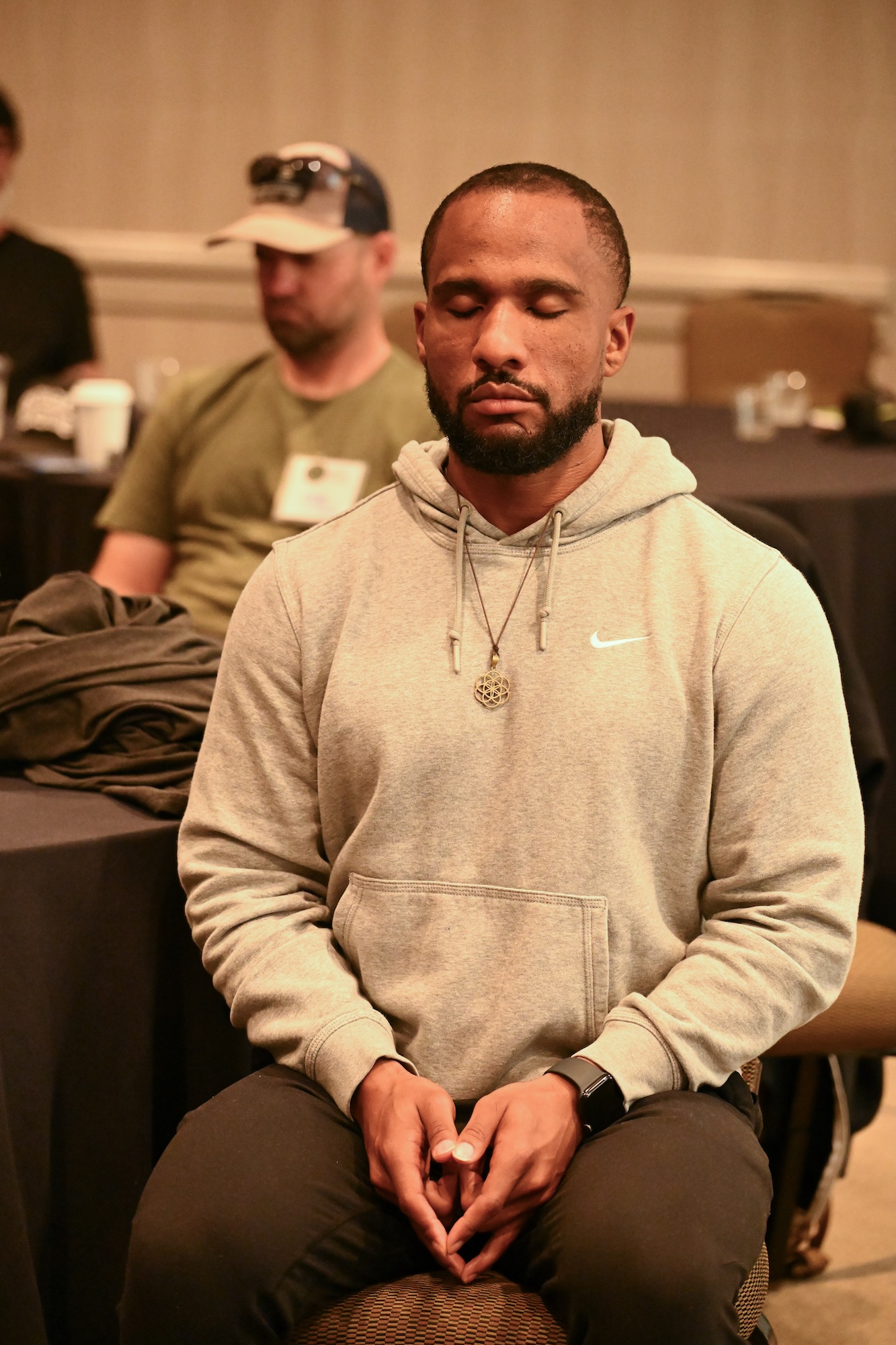
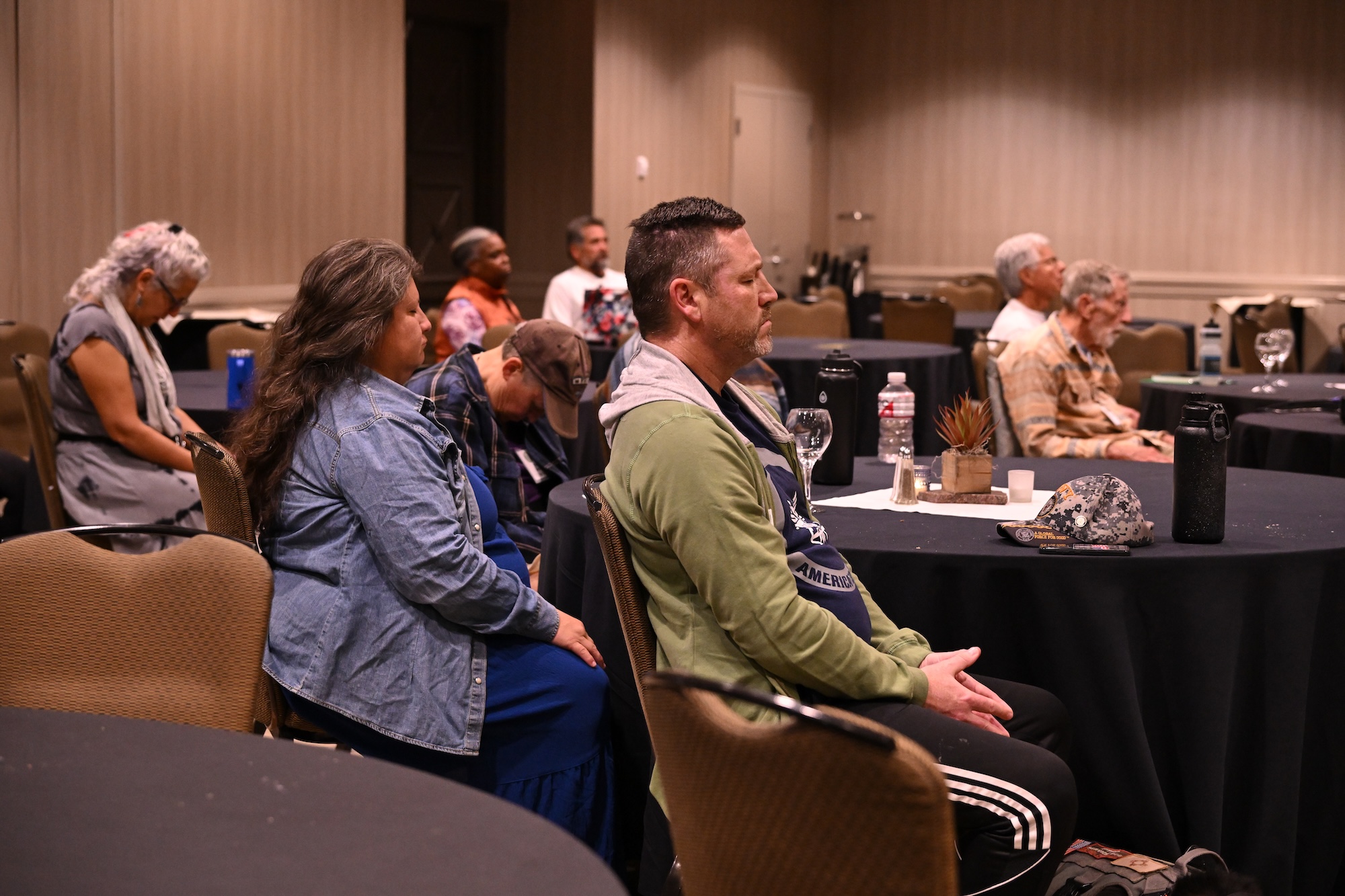
View photos below from a recent retreat Steele organized through the Veterans Meditation Retreat Project. All photos by Iscah Carey.








Thank you for subscribing to Tricycle! As a nonprofit, we depend on readers like you to keep Buddhist teachings and practices widely available.